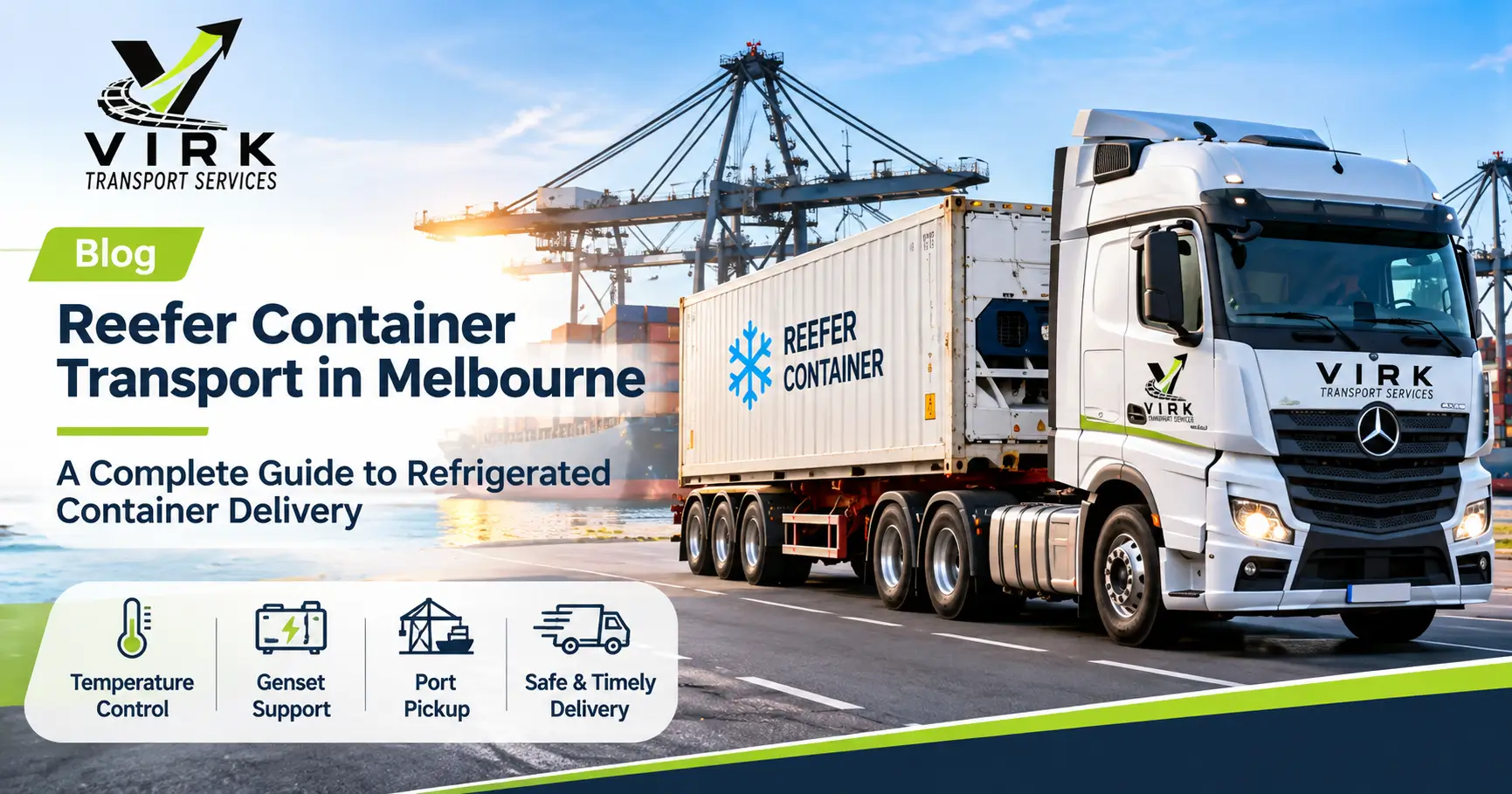
Moving refrigerated cargo takes more planning than moving a standard shipping container. Food, dairy products, frozen goods and other temperature-sensitive products may need controlled conditions throughout their journey.
If you are arranging reefer container transport in Melbourne, you need to know how the container will be collected, how its temperature will be maintained and what happens when it reaches the delivery site.
This guide explains how refrigerated container transport works, why gensets matter, what affects transport costs and how to prepare for a smooth delivery.
What Is Reefer Container Transport?
A reefer container is a shipping container fitted with a refrigeration system. It is designed to maintain controlled temperatures during shipping and storage when suitable power is available.
Unlike a standard dry container, a reefer has insulated walls, temperature controls and refrigeration equipment.
Reefer containers are commonly used for:
- Fresh fruit and vegetables
- Frozen food and seafood
- Dairy products
- Meat and poultry
- Pharmaceutical products requiring suitable temperature controls
- Other temperature-sensitive cargo
The temperature setting depends on the cargo and the shipper’s instructions. Not every product needs the same conditions.
Reefer container transport involves moving these containers between ports, warehouses, distribution centres and other locations while managing their specific handling requirements.
How Does Reefer Container Transport Work in Melbourne?
For imported cargo, the transport process usually starts when the container is available for collection from the terminal.
The transport company needs the correct container details, collection instructions and delivery information before arranging the movement.
1. Confirm the Container Details
Before booking transport, provide:
- Container number
- Container size and type
- Gross container weight
- Collection terminal
- Delivery address
- Required delivery date
- Temperature setpoint
- Power requirements during transport
- Any special handling instructions
These details help the transport provider assess the job and select suitable equipment.
Read More: Sideloader vs Skel Container Transport: Which Do You Need?
2. Arrange Port Collection
The container must be ready for release before collection.
Depending on the shipment, this may involve customs and biosecurity clearance, terminal release conditions and a suitable vehicle booking slot.
A delay in any of these steps can affect the collection schedule.
For temperature-sensitive cargo, it is also important to confirm the container’s power arrangements during any waiting period.
3. Transport the Container to Its Destination
After collection, the truck carries the reefer container to the nominated delivery location.
The journey may involve a short metropolitan trip or a longer regional movement.
The transport plan should account for the container’s power needs, journey duration, road conditions and delivery appointment.
4. Complete the Delivery
At the delivery site, the receiving team must be ready to accept the container.
If the container is being unloaded immediately, the driver may need to wait while the warehouse completes the process.
If the container is being left on-site, suitable placement equipment and ongoing power arrangements may be required.
The transport provider and customer should agree on these requirements before the truck arrives.
Why Are Gensets Important for Reefer Container Transport?
A refrigerated container needs electricity to run its refrigeration equipment.
At a port or suitable storage facility, a reefer can be connected to an external electrical supply. During road transport, that supply may not be available.
A reefer genset is a generator that can provide electricity to the container while it is being transported.
This can help maintain refrigeration during the journey.
Does Every Reefer Container Need a Genset?
Not every journey has the same power requirements.
The need for a genset depends on the cargo, transport duration, temperature requirements and the agreed transport plan.
Some movements may be arranged without continuous powered refrigeration where the cargo owner has assessed and accepted the conditions. However, this should never be assumed.
For cargo that requires uninterrupted refrigeration, confirm suitable genset arrangements before booking.
What Should You Check Before Transport?
Ask the transport provider:
- Is a compatible genset available?
- Will the container be powered during the journey?
- Who is responsible for connecting and disconnecting the power?
- How will a power failure be managed?
- Is temperature monitoring included?
- What happens if delivery is delayed?
These questions can prevent misunderstandings and help protect temperature-sensitive shipments.
20ft vs 40ft Reefer Container Transport
Refrigerated shipping containers are available in different sizes. Two common options are 20ft and 40ft containers.
Feature | 20ft Reefer Container | 40ft Reefer Container |
Nominal length | 20 feet | 40 feet |
Cargo space | Smaller | Larger |
Typical use | Smaller shipments | Higher-volume shipments |
Transport planning | Weight and access checks | Weight, length and access checks |
Power requirements | Depends on equipment | Depends on equipment |
A larger container does not automatically mean a heavier load. The actual gross weight depends on the container and its contents.
Before booking, confirm the container’s verified gross mass, equipment requirements and any site restrictions.
Read More: 20ft vs 40ft Container Transport in Melbourne: Which Is Right for You?
What Affects Reefer Container Transport Costs in Melbourne?
There is no single transport price that applies to every refrigerated container.
The final cost depends on the job details and the services required.
Transport Distance
A delivery close to the Port of Melbourne will have different transport requirements from a regional Victorian delivery.
Distance, travel time and road conditions can all affect the quote.
Container Size and Weight
The size and gross weight of the container determine which equipment can be used.
Heavy containers may require additional planning or attract extra charges.
Genset Requirements
If powered refrigeration is required during transport, the provider may charge separately for genset equipment and operation.
Ask whether these costs are included in the quoted price.
Terminal and Booking Charges
Port collection may involve terminal-related fees and booking charges.
The applicable charges depend on the terminal, booking arrangements and service provider.
Waiting Time and Delivery Access
A truck may experience delays if the receiving warehouse is not ready or the delivery site has restricted access.
Additional waiting time can increase the final transport cost.
Empty Container Return
After unloading, the empty reefer may need to be returned to a nominated depot.
Confirm whether the return movement and any applicable depot charges are included in the quote.
Tip: Request an itemised quotation. This makes it easier to compare transport offers and understand possible additional costs.
Common Reefer Container Delivery Problems
Many delivery issues can be reduced through clear communication before collection.
Incorrect Temperature Instructions
The transport provider needs the correct temperature setpoint and power instructions.
Never assume that the required temperature is the same for every shipment.
No Power Available at the Delivery Site
A container that is left at a warehouse may need a suitable external power connection.
Confirm that the receiving site has compatible power arrangements before delivery.
Warehouse Not Ready for Unloading
If the receiving team is unavailable, the truck may need to wait.
Agree on the delivery appointment and unloading method in advance.
Missing Release Documents
A container may be physically at the terminal but not ready for collection.
Check the required release and clearance conditions before scheduling transport.
Unclear Empty Return Instructions
The empty container may need to be returned to a specific depot within the applicable return period.
Confirm the return location and instructions to avoid unnecessary delays.
Reefer Container Transport Checklist ?
Use this checklist before arranging refrigerated container delivery in Melbourne.
Container information
- Confirm container number and size.
- Check gross weight.
- Confirm the required temperature.
- Provide any special cargo instructions.
Port collection
- Confirm terminal availability.
- Check release and clearance status.
- Arrange the required booking.
- Confirm collection timing.
Transport
- Confirm whether a genset is required.
- Check power compatibility.
- Agree on temperature monitoring responsibilities.
- Provide the correct delivery address.
Delivery
- Confirm the warehouse appointment.
- Check truck access and unloading arrangements.
- Arrange power if the container will remain on-site.
- Confirm empty container return instructions.
Having these details ready can reduce delays and make the booking process easier.
Read More: Port of Melbourne Container Transport: A Practical Guide for Importers and Exporters
How to Choose a Reefer Container Transport Company in Melbourne
Choosing a transport provider involves more than comparing the lowest price.
A suitable provider should be able to explain how the container will be collected, transported and delivered.
Before confirming a booking, ask about equipment availability, genset arrangements, terminal collection procedures and possible additional charges.
You should also confirm how delivery updates are provided and who to contact if there is a delay.
Clear communication is especially important for cargo that needs controlled temperatures.
Arrange Reefer Container Transport in Melbourne
Planning refrigerated container transport starts with accurate shipment information and clear delivery instructions.
VIRK TRANSPORT SERVICES welcomes enquiries about reefer container transport requirements in Melbourne.
Share your container details, collection location, delivery address and temperature-control requirements so the team can review the movement and discuss available transport options.
Contact VIRK TRANSPORT SERVICES to request a reefer container transport quote.
Frequently Asked Questions
There is generally no difference. Both terms describe a shipping container fitted with refrigeration equipment to maintain controlled temperatures.
It may be possible for some movements, but this depends on the cargo requirements and the approved transport plan. Never assume that an unpowered journey is suitable for temperature-sensitive goods.
Yes. A 40ft reefer can be transported by a suitable truck and trailer, subject to weight limits, access conditions and equipment availability.
The cost depends on the container size, weight, distance, genset requirements, terminal charges and delivery conditions. Request a quotation based on the specific shipment.
If the cargo requires ongoing refrigeration, the container needs a suitable power supply after delivery. The receiving site should arrange this before the container arrives.
Provide the container size, gross weight, pickup location, delivery address, temperature requirements, genset needs and preferred delivery date.